

Electrical wire-end termination
Wire Ferrules and Bootlace Ferrules
Wire ferrules, also called bootlace ferrules, terminate stranded conductors before they enter a terminal. Compare insulated, twin and non-insulated types by conductor cross-section, terminal entry depth, collar and colour system.
Insulated, twin and non-insulated
Combined listed cross-section range
Selection data for international projects
CE and RoHS across the range; cULus on selected insulated HE models
Product overview
What is a wire ferrule?
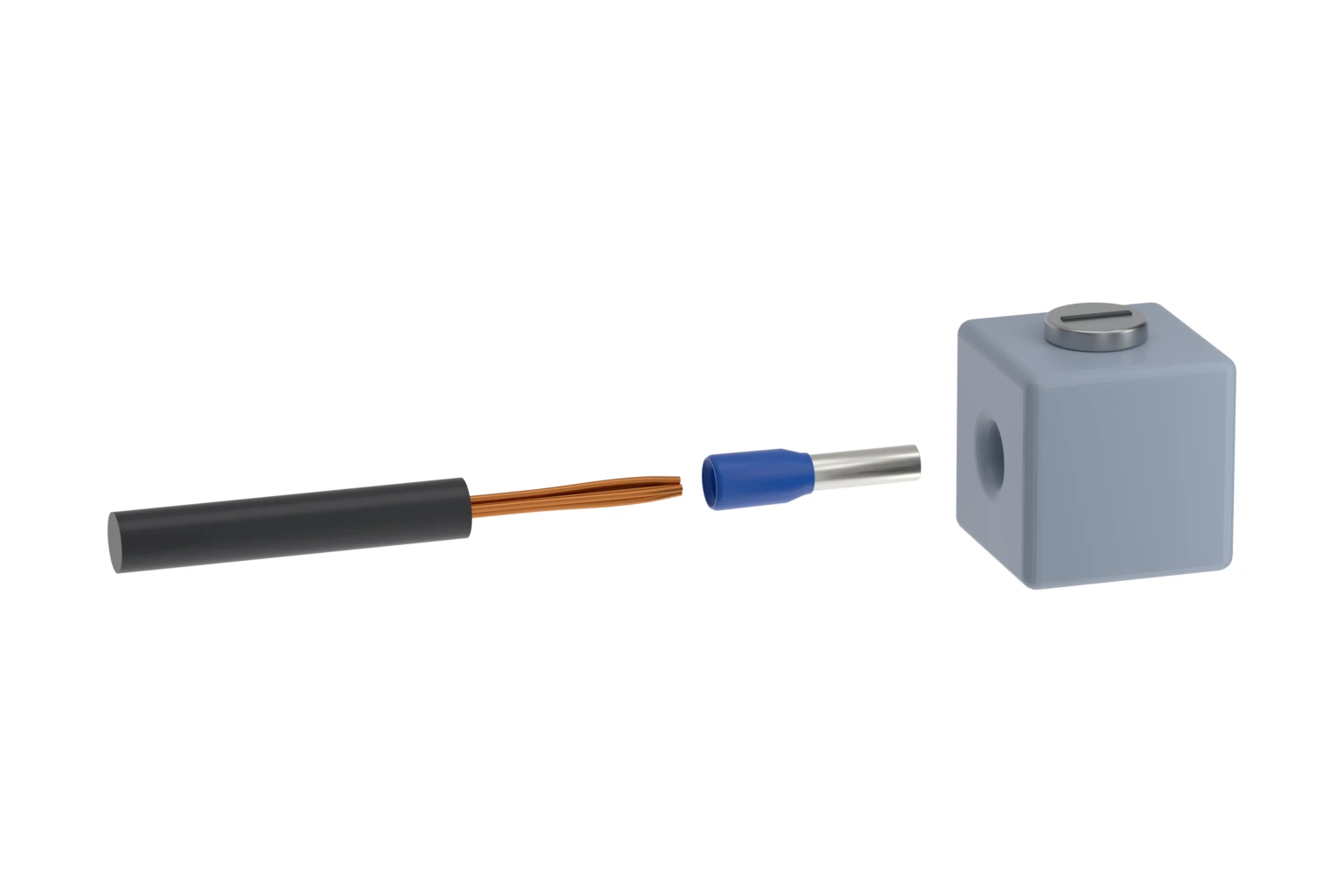
A wire ferrule is a thin, tin-plated copper sleeve crimped over the end of a stranded wire before it enters a screw-clamp or spring-clamp terminal. It keeps the strands together, creates a defined contact area and makes panel wiring easier to inspect and reconnect.
Wire ferrules, bootlace ferrules, cable ferrules, cord end ferrules and wire end ferrules are common regional or catalogue names for this electrical termination. They should not be confused with wire-rope ferrules used on steel cable.
Product range
Choose a wire ferrule or bootlace ferrule type
Start with the number of conductors entering the terminal and whether the application needs an insulating collar.
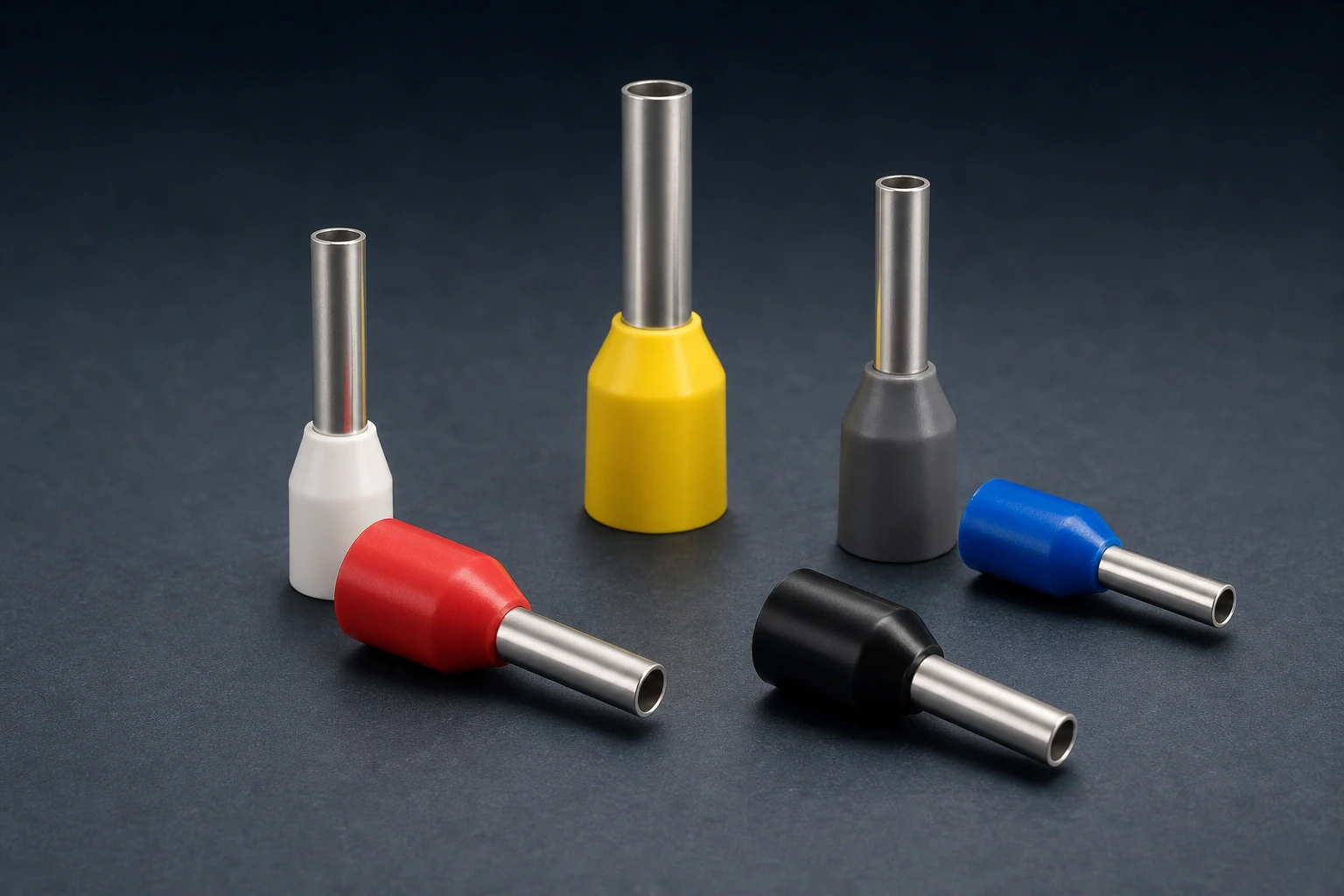
0.3–150 mm² · AWG 24–300 MCM
Insulated Wire Ferrules
Standard single-conductor bootlace ferrules with a PA66 collar. The collar guides the conductor, supports the insulation and can identify cross-section using DIN or French colour systems.
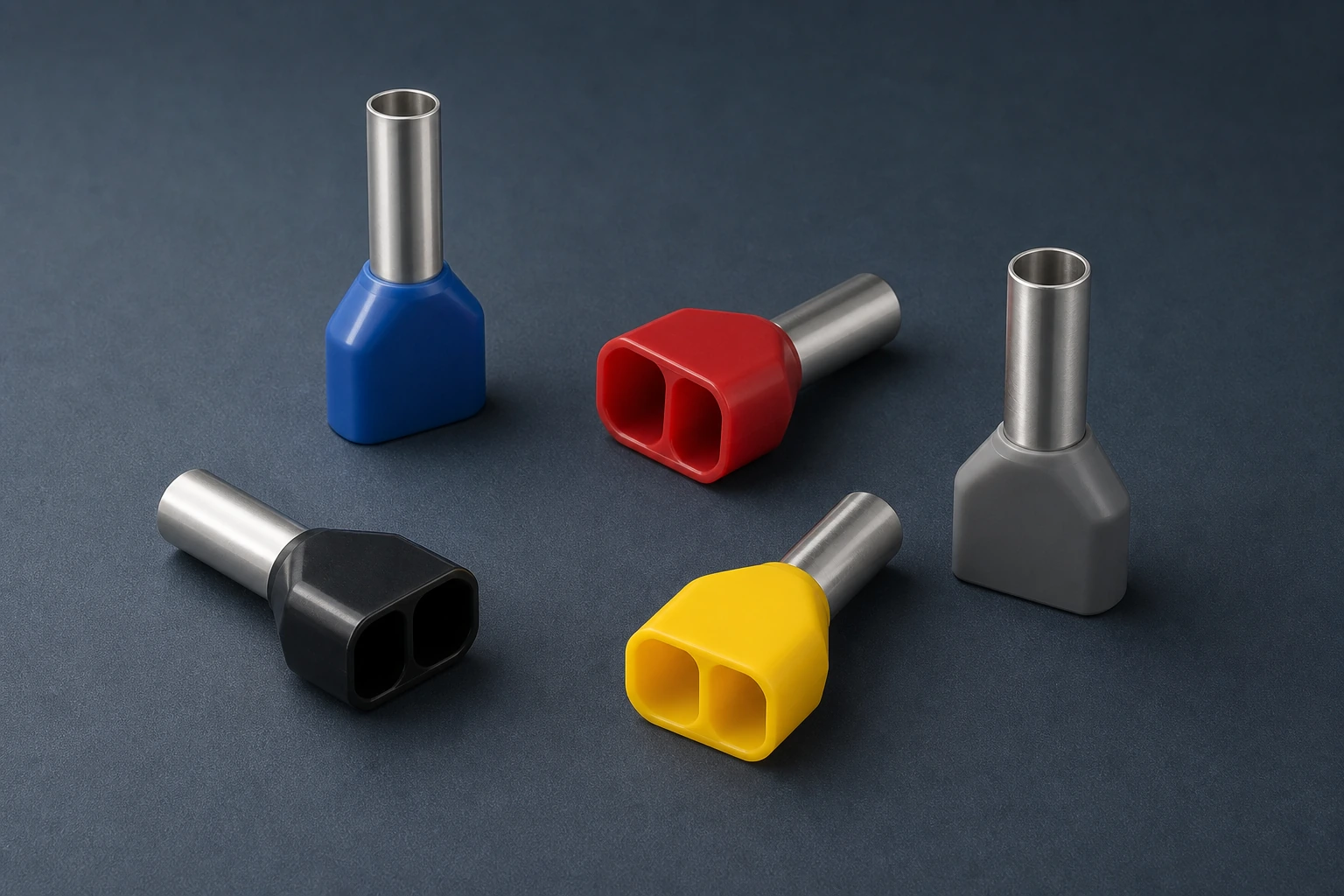
2×0.5–2×16 mm² · 18 listed sizes
Twin Wire Ferrules
Twin bootlace ferrules terminate two same-size conductors in one crimp. Their wider collar has two entries and the barrel forms one defined termination for suitable terminal points.
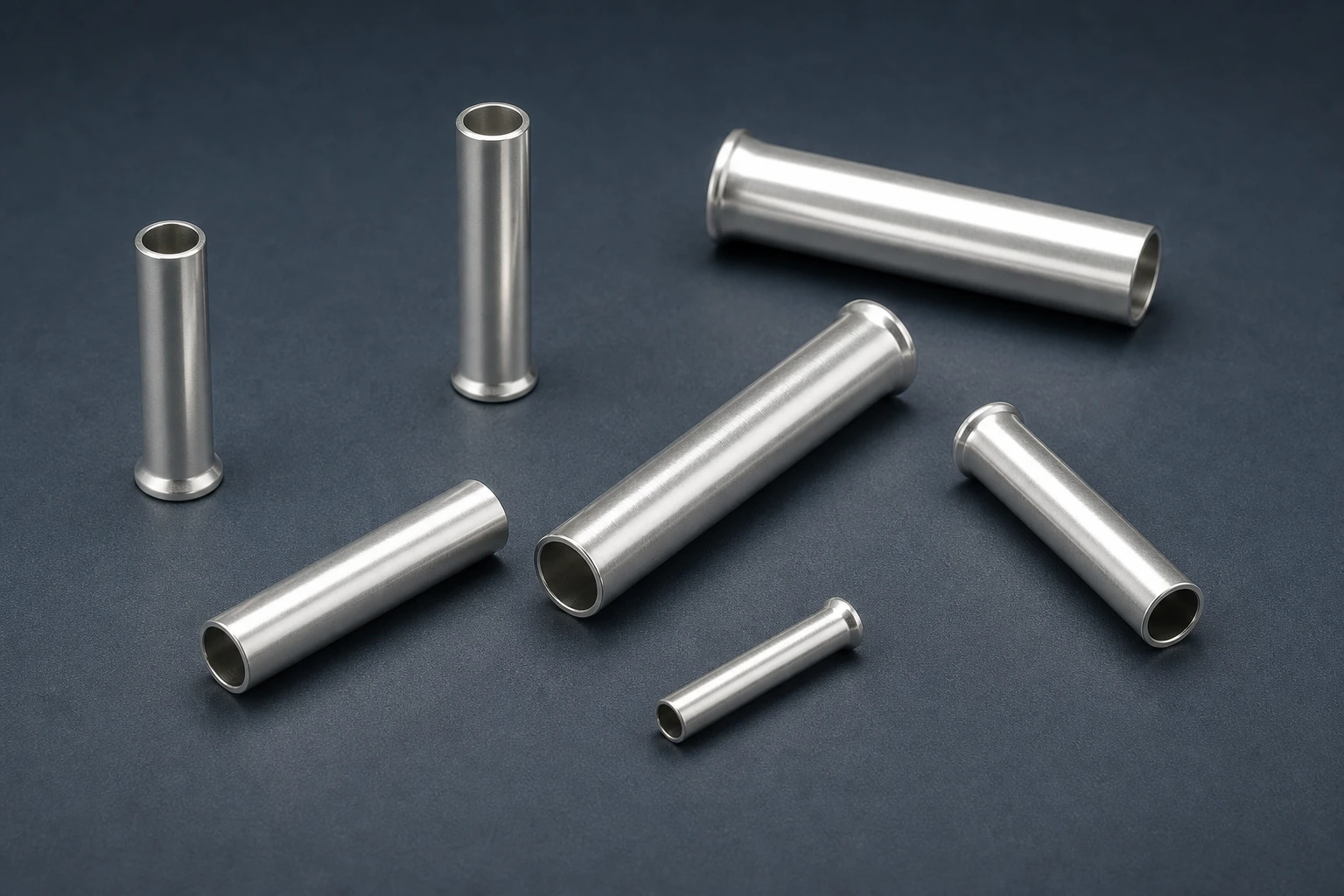
0.3–185 mm² · AWG 24–350 MCM
Non-Insulated Wire Ferrules
Bare tin-plated copper sleeves without a plastic collar. Use them where space is limited, no colour coding is required or the conductor size is beyond the insulated range.
Quick selection
Wire ferrule type comparison
| Ferrule type | Conductors | Plastic collar | Typical application | Selection priority |
|---|---|---|---|---|
| Insulated single | One | Yes | General control-panel and machine wiring | Cross-section, pin length and colour system |
| Twin / double | Two | Yes, two entries | Daisy chains and two-wire distribution | Two equal conductor sizes and terminal approval |
| Non-insulated | One | No | Restricted spaces and larger conductors | Cross-section, sleeve length and identification method |
Selection method
How to select ferrules for wires
Match the conductor
Use the conductor cross-section in mm² or its verified AWG equivalent. Do not size a ferrule by insulation diameter.
Match the terminal
Start with the terminal manufacturer’s ferrule or strip-length requirements and permitted conductor count. Use a stated ferrule length directly; if only strip length is given, treat it as a compatibility input and confirm the pin length. See the ferrule pin length guide.
Confirm colour and quantity
DIN and French colour codes differ at several sizes. State the required standard, model, colour and order quantity when requesting a quotation.
Sizes and terminology
Wire ferrule sizes: mm², AWG and pin length
Control-panel wiring commonly uses ferrules from 0.5 to 6 mm², while distribution and larger equipment can require substantially larger cross-sections. The conductor size determines the barrel bore; the terminal manufacturer’s connection data is the starting point for selecting the required pin or sleeve length.
British and European buyers often search for a size such as a 6mm ferrule or 25mm bootlace ferrule, while AWG descriptions are more common in North American documentation — at the top of the range that often means gauge rather than AWG, as in 4 gauge or 0 gauge. Always confirm the actual conductor cross-section instead of relying on a rounded conversion.
Shop by conductor size. Each page compares the insulated, twin and non-insulated models available at that cross-section, including pin lengths, AWG references, DIN collar colour and cULus coverage by part number. All three types are supplied with a CE Declaration of Conformity and RoHS documentation as standard.
For a quick comparison of calculated conductor area and nominal metric catalogue references, use the AWG to mm² converter.
View the complete wire ferrule size, AWG and colour-code guide →
Technical guidance
Wire ferrule resources
Understand where wire-end ferrules are used and how insulated, twin and bare styles differ.
Compare mm², AWG, DIN colours, French colours and commonly used terminal ranges.
Review strip length, tool selection, crimp inspection and common installation mistakes.
Not sure which model fits? Filter by conductor size, pin length and series to find the part number.
Project enquiry
Request wire ferrule pricing and availability
Send the ferrule type, conductor size, pin length, colour standard, quantity and destination country. Price, production availability and lead time are confirmed for the requested model and order quantity.
Frequently asked questions
Wire ferrule FAQ
Are wire ferrules and bootlace ferrules the same product?
Yes. Wire ferrule is widely used in North American product descriptions, while bootlace ferrule is common in the UK and Europe. Cable ferrule, cord end ferrule and wire end ferrule are also used for the same type of stranded-wire termination.
Which type of ferrule should I use?
Use an insulated single ferrule for one conductor in general panel wiring, a twin ferrule when two same-size conductors must enter an approved terminal point together, and a non-insulated ferrule when the plastic collar would interfere or a larger bare sleeve is required.
How do I choose the correct wire ferrule size?
Match the ferrule barrel to the conductor cross-section, then start pin-length selection from the terminal manufacturer’s stated ferrule or strip-length requirements. If only strip length is given, use it as a compatibility input and confirm the pin length rather than assuming the dimensions are equal.
Are ferrule wire connectors the same as wire connectors?
Not exactly. A ferrule terminates and contains the strands at the end of a conductor; it does not join two wires by itself. The crimped ferrule is inserted into a compatible terminal block, connector or equipment terminal to make the electrical connection.
What information is needed for a wire ferrule quotation?
Provide the ferrule type, conductor cross-section or wire specification, required pin length, colour or colour standard, quantity, destination country and any documentation requirements. A drawing or existing part number is useful when the terminal fit is critical.