
UL 94 V-0 is a plastic flammability classification. In its vertical flame test, the material must stop flaming within 10 seconds after each removal of the test flame, and falling particles must leave the cotton indicator below unignited. On an insulated wire ferrule, the rating describes the plastic used for the collar.
What the rating describes on a ferrule
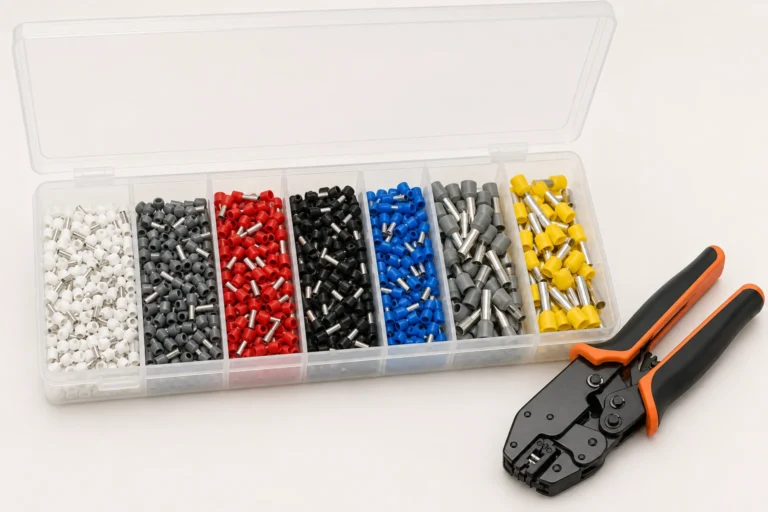
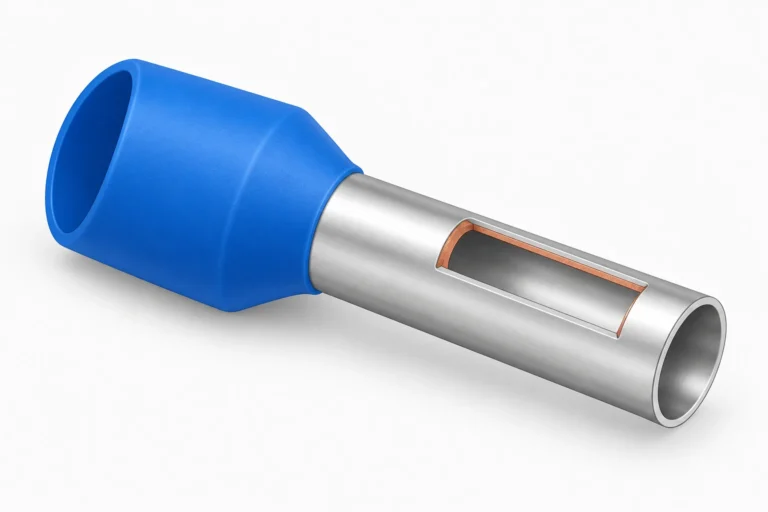
A ferrule has a metal barrel that holds the conductor strands and, on the insulated type, a moulded plastic collar that guides the wire into the barrel. The collar is the part relevant to a UL 94 plastic flammability rating. The difference between insulated and non-insulated ferrules starts with this extra plastic component.
Flame-retardant plastic helps limit continued burning after a brief ignition source disappears. That is useful around electrical connections, where a fault can expose nearby materials to heat or flame. The connection still needs correct sizing and assembly to control heating during service.

V-0 vs V-1 and V-2
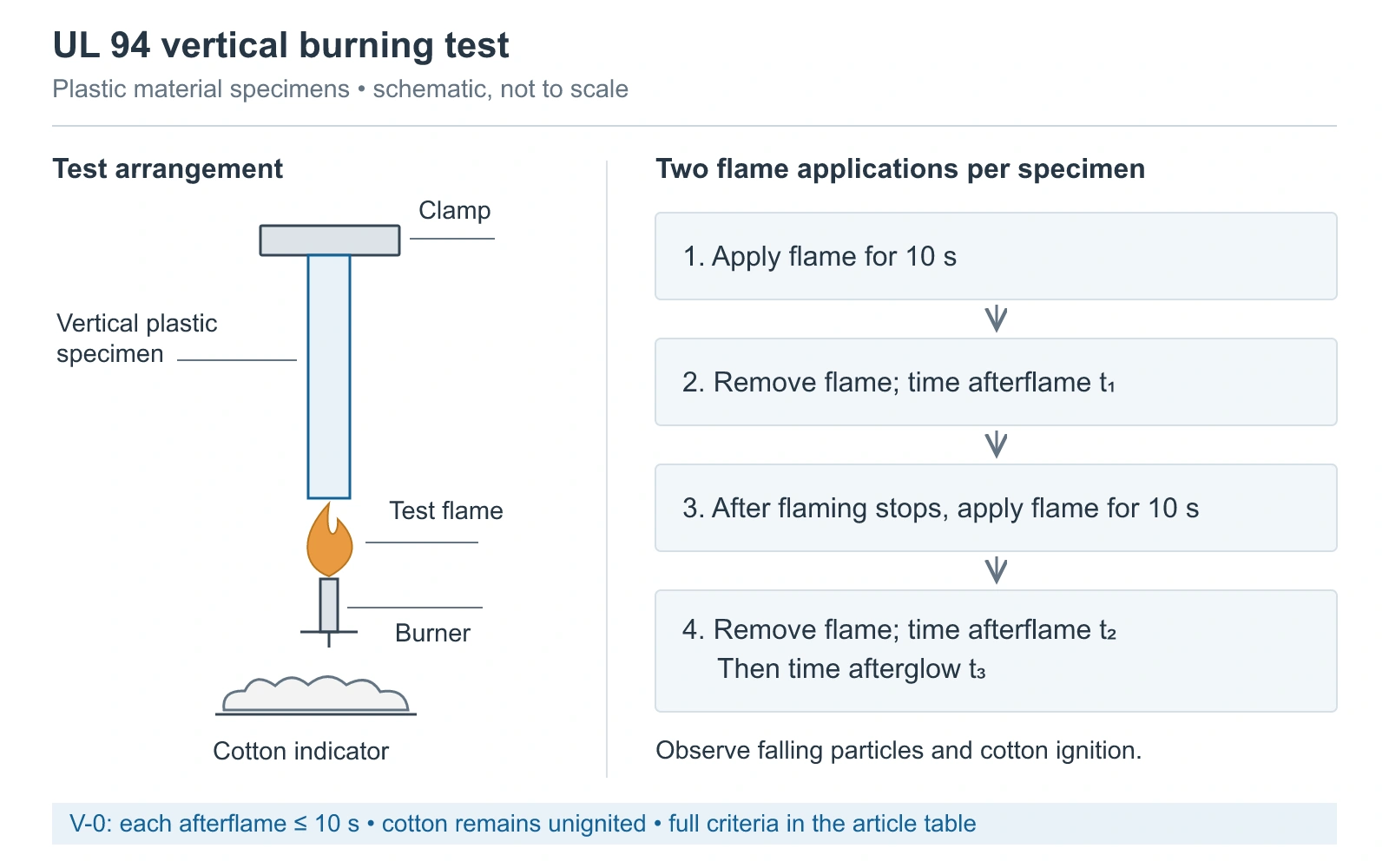
The vertical test uses plastic specimens held above a cotton indicator. Each specimen receives two flame applications of 10 seconds each. After each application, the burner is withdrawn and the remaining flaming time is measured. The test also checks glowing combustion and whether falling material ignites the cotton.
Figure 2 shows the arrangement and timing sequence. The test specimen is a bar of the plastic material used for the collar.
| Test criterion | V-0 | V-1 | V-2 |
|---|---|---|---|
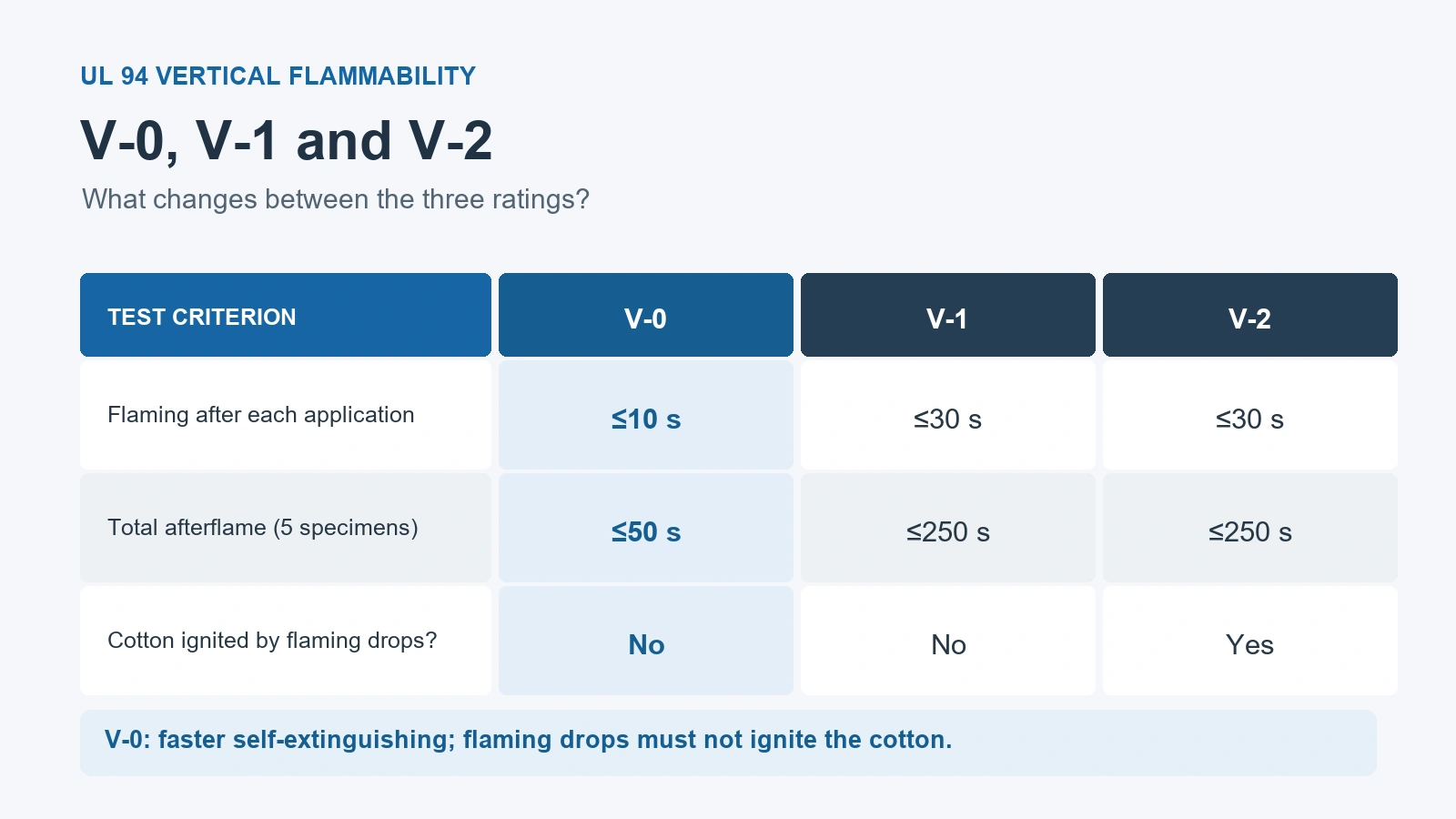
| Maximum flaming time after each flame removal | 10 seconds | 30 seconds | 30 seconds |
| Maximum total flaming time for a set of five specimens | 50 seconds | 250 seconds | 250 seconds |
| Maximum flaming plus glowing time after the second flame removal | 30 seconds | 60 seconds | 60 seconds |
| May falling particles ignite the cotton? | No | No | Yes |
For all three classes, combustion must also stop short of the holding clamp. These criteria are set out in UL Solutions’ explanation of plastic combustion tests.
V-0 is the stricter of these three vertical classifications. It requires faster extinction than V-1 or V-2. V-1 and V-2 have the same time limits; their distinction is the cotton-ignition result. Asahi Kasei’s UL 94 guide also explains how these vertical classes differ from HB, the horizontal-burning classification.
For a buyer comparing otherwise equivalent ferrules, V-0 gives a more demanding flame-performance specification than V-2. If the project requires V-0, choose the documented V-0 version. A V-2 version does not meet that requirement.
Why thickness and material grade matter
Flame behaviour depends on the plastic formulation and the thickness tested. PA66 identifies a polymer family; the resin grade identifies the particular formulation used to mould the collar. Different grades can have different flame classifications.
Read the flame class together with its thickness entry. For example, suppose a material record states V-0 at 1.5 mm, but the proposed collar has a wall only 0.8 mm thick. The thicker test specimen leaves the thinner wall’s classification unresolved. Choose a grade with documented V-0 performance covering that thinner section, or obtain evidence for the finished component. Those dimensions are an example, not ferrule design limits.
The UL Yellow Card records the material designation, colour coverage, thickness and flame class. Match those entries to the collar material being offered. When changing resin grades or ferrule manufacturers, compare these entries before accepting a replacement.
Choosing a ferrule for a V-0 requirement
Put the flame class in the purchase specification alongside the conductor size and pin length. A useful material requirement is: “Plastic collar: UL 94 V-0; documentation to identify the material grade and cover the collar’s wall thickness and colour.” The ferrule manufacturer can then identify the product and provide the supporting material information.
Keep operating temperature as a separate specification. V-0 describes behaviour after flame exposure; the product’s temperature range tells you where it can work continuously. For UL-certified ferrules, check the exact part number in the ferrule certification record as well: the plastic’s flame classification and the ferrule’s electrical certification answer different questions.