
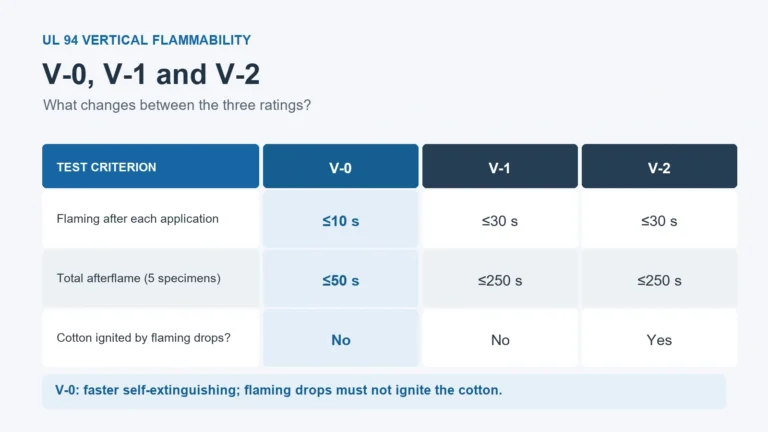
UL 94 V-0: What the Rating Means for Wire Ferrules
UL 94 V-0 explained for wire ferrules: how the plastic collar is rated, how V-0 compares with V-2, and what to check in a material specification.

UL 94 V-0 explained for wire ferrules: how the plastic collar is rated, how V-0 compares with V-2, and what to check in a material specification.
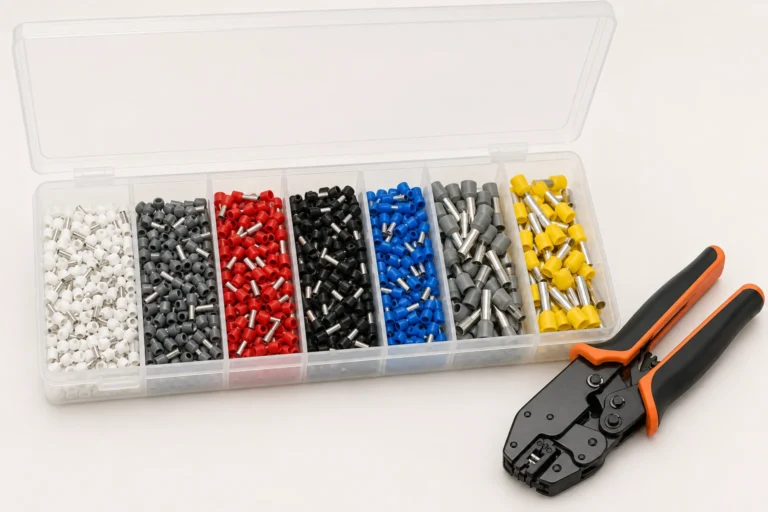
Tinned wire ends creep under screw and crimp pressure and work loose. See what BS 7671 and IPC/WHMA-A-620 say, and why a ferrule is the fix.
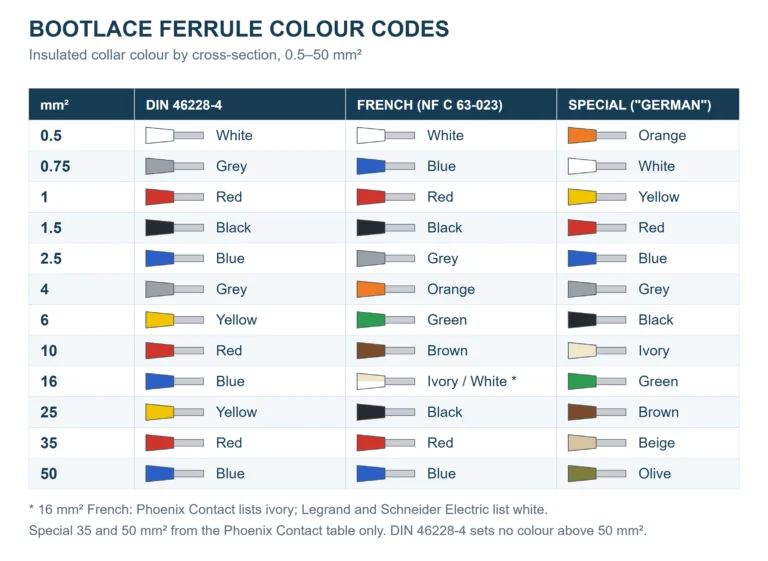
Bootlace ferrule colour codes compared: DIN 46228-4, French and the \"German\" sequence from 0.5 to 50 mm², plus colours that mean different sizes.
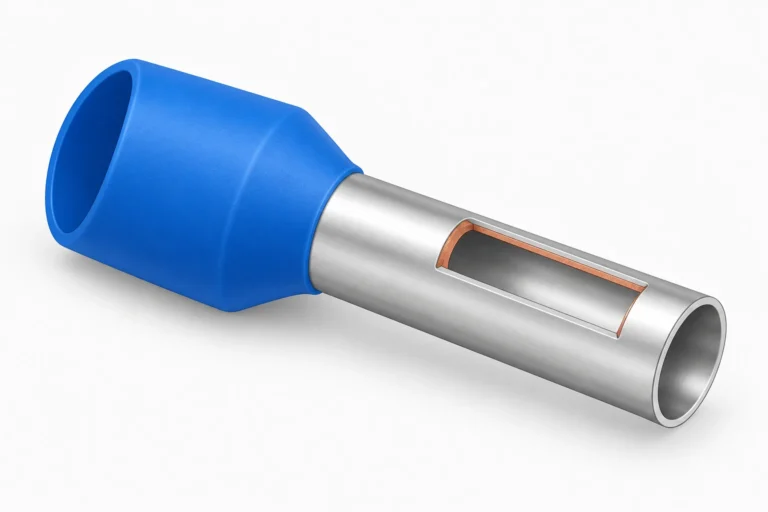
Copper wire ferrules use a copper barrel with a thin tin coating. Learn what each layer does and how to verify ferrule material before buying.
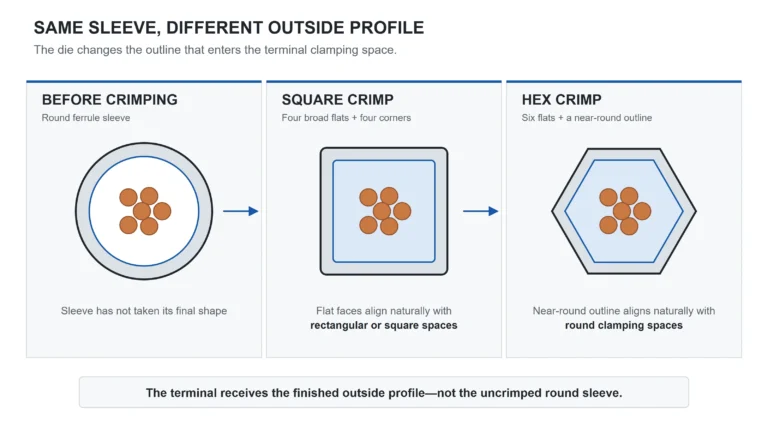
Square vs hex ferrule crimp explained by terminal shape, conductor size and tool range. See when each profile fits and what to check before buying.
What is a crimping tool, which type each panel connection needs, and what IEC 60352-2, DIN 46228 and UL 486F require of the finished crimp.
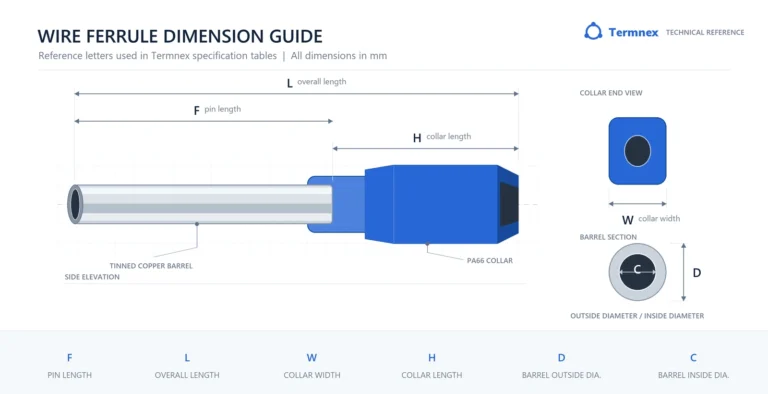
Ferrule pin length starts with the terminal manufacturer's requirement, not the wire size. Why one cross-section comes in several lengths.
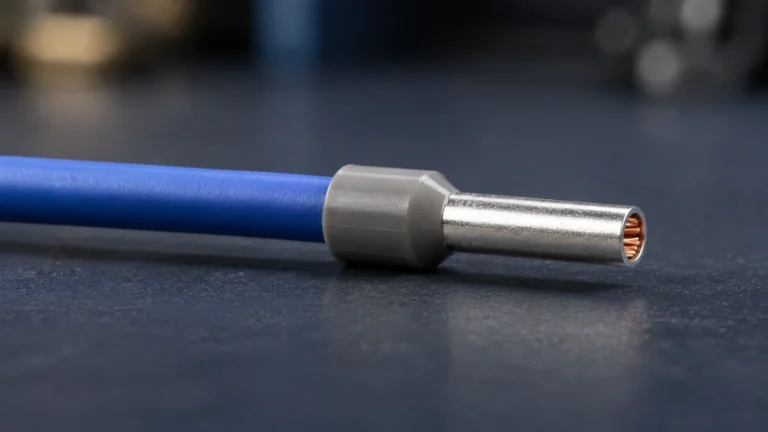
Should you use ferrules on stranded wire? A terminal-by-terminal answer, what UL 508A and IEC actually say, and the cases where a ferrule makes it worse.
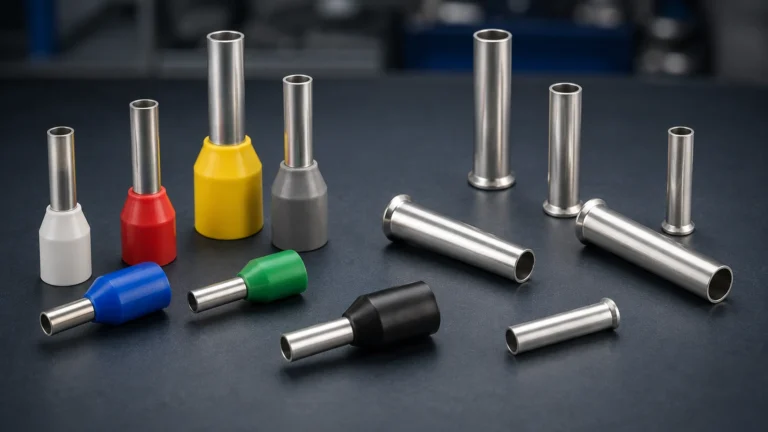
Insulated vs non-insulated ferrules compared with real size tables, the UL 508A rule that covers both types, and where the DIN colour code stops working.